
Series of the Week.
A Netflix-style discovery platform for YouTube's hidden web series.
YouTube had no concept of a "show."
During a research project at YouTube, I discovered that the platform tracked videos, playlists, and channels — but not shows. There was no entity for episodic series in YouTube's database. That meant thousands of high-quality, bingeable web series were effectively invisible to the viewers who would have loved them. The platform optimized for the next video, not the next episode.
Give web series the streaming experience they deserved.
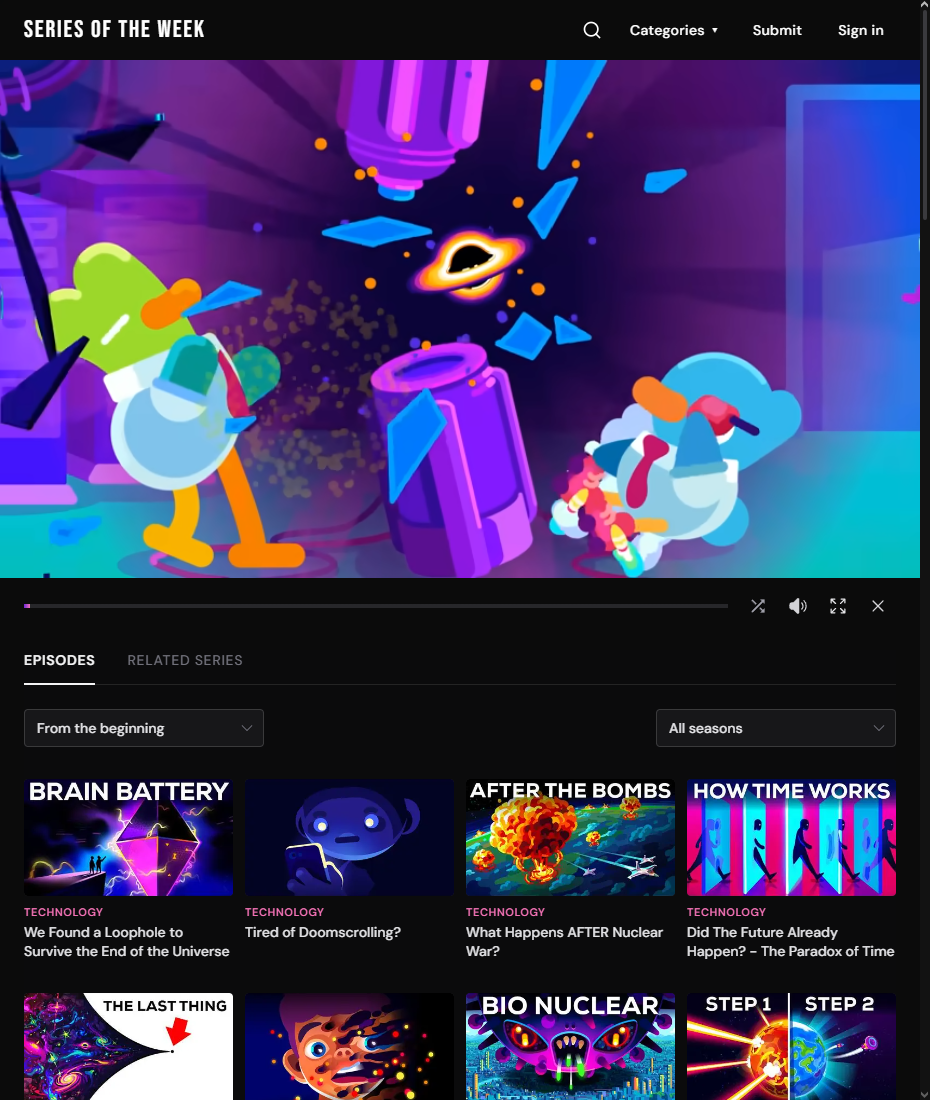
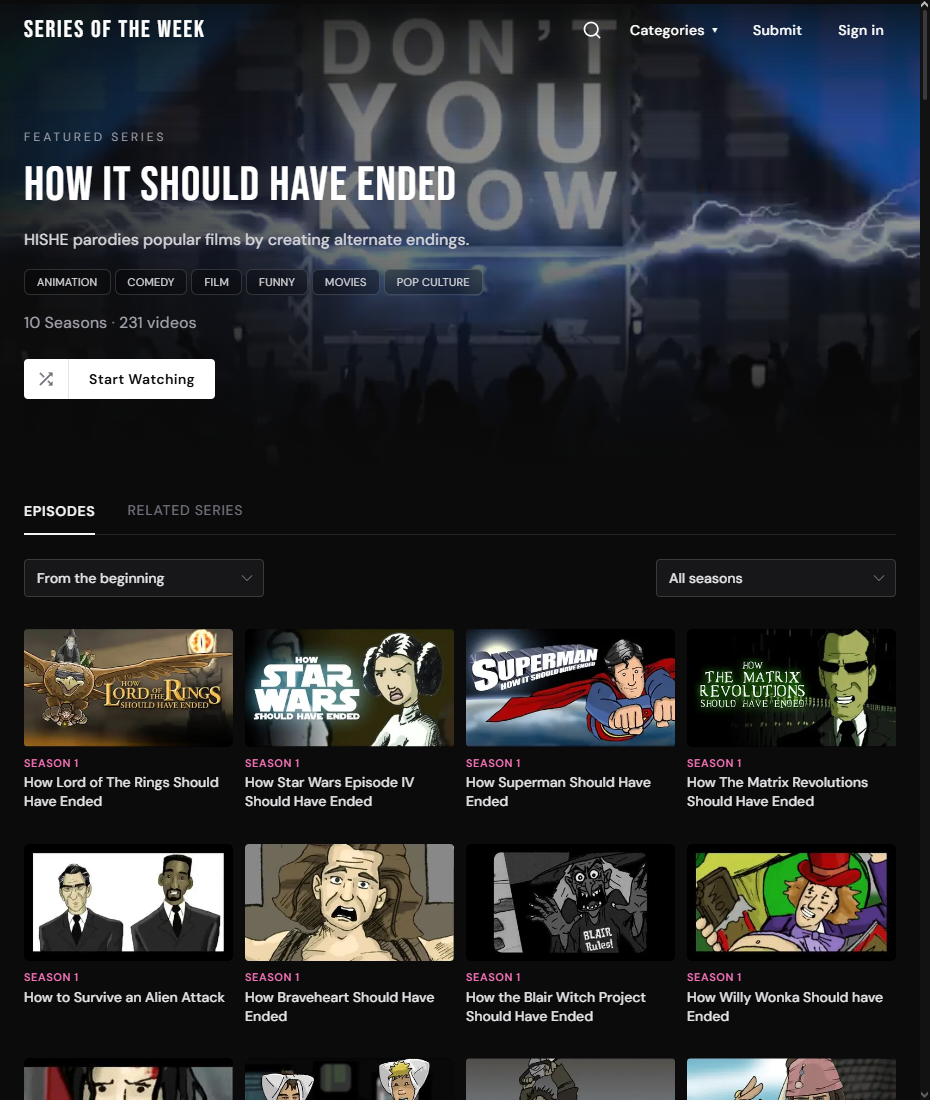
Series of the Week wraps curated YouTube playlists in a Netflix-style UI — featured series, category rows, show pages with episode grids, season navigation, and a weekly editorial pick. The video plays through the YouTube API so creators keep their views and revenue.
Curated, not crawled
Every series is hand-picked, structured, and tagged across 30+ categories. No algorithm, no noise.
Netflix vocabulary
Hero, rows, show pages, episode grids — the UX language audiences already know from streaming.
Creator-safe
Built on the YouTube API so creators keep their views, their revenue, and their audience.
How it came together
- 01
Found the gap at YouTube
A research project assigned to me at YouTube revealed that the platform had no data on 'shows' — no entity, no metadata, no discovery surface. I had to collect everything manually. The conclusion: thousands of great series were invisible, and nobody was going to fix it from the inside.
- 02
Built the first prototype
After leaving YouTube I built a Squarespace MVP — each show was a blog post wrapping a YouTube playlist, organized by genre tag. Manually curated ~100 shows, ran guerrilla GIF ads on Reddit and Instagram, and got real signal back: viewers wanted exactly this.
- 03
Caught VC attention — and shipped a real product
Next 10 Ventures, a creator-focused studio, approached me after seeing the prototype. I joined as PM and R&D Lead, hired a team of engineers, a UI/UX designer, and a dedicated curator, and rebuilt the platform properly — Airtable backend, custom taxonomy, full show pages with season nav, video player, user accounts, achievement badges, and 600+ curated shows across 30+ categories.
- 04
Project shelved
Right as we were ready to start beta testing and industry outreach, funding became unavailable. The project was put on hold before it ever went public.
- 05
Rebuilt solo in two days
In April 2026, I rebuilt the entire platform from scratch in two days — Next.js, Supabase, YouTube API — using Claude and Cursor as my development environment. Migrated the full Airtable catalog to Supabase, rebuilt the UI, and shipped it. What took a full hired team months in 2018 took one person and AI tools two days in 2026.
The problem worth solving is the catalog.
The original curation process was entirely manual — a dedicated curator running keyword searches and reviewing shows one by one. That's the real constraint. If I ever picked this back up, I'd build an AI-powered ingestion pipeline: agents that discover new series across YouTube, extract structured metadata, score quality against defined criteria, and surface candidates through a lightweight approval UI before anything goes live. The catalog could stay fresh indefinitely without a full-time curator — which is the only way this kind of platform becomes sustainable.
YouTube Talent Vault →
From manual requests to a self-serve creator database used across every YouTube office.