
Putting food-shopping decisions back in the hands of the people doing the shopping.
Kitchen and grocery shoppingWe shop on impulse because we have nothing better to go on.
Most of what decides a grocery bill happens before anyone reaches a shelf. What's already at home? What do we want to eat until the next trip? What's on sale, and where is it cheapest? We almost never know any of it, so we walk the aisles and decide on the spot.
The store is built for that moment. End caps, displays and sale tags are placed to catch shoppers who arrive without a plan. The store also knows what we buy, through the loyalty card, and uses it to decide what to put in front of us. We have no equivalent on our side.
Agoure is my attempt to even that out. The goal is to give a household the information the store already has, and to move the decisions to before we walk in: what to cook, what to buy, where to buy it, and whether a deal is really a deal.
Four problems we hit on every trip.
My fiance and I shop at Vons, Ralphs, Trader Joe's and Costco. I started by writing down where the trip goes wrong for us, and it came down to four things.
- 01
We start from scratch every time.
Before each shop we redo the same three jobs from nothing: looking up recipes we already like, deciding roughly what to eat until the next shop, and checking what's already in the fridge. None of that work carries over to the next week, so every trip starts from a blank page.
- 02
We never know what's on sale before going.
Stores run flyer deals all the time, but they never reach us in a way that helps us decide what to buy or where. And a sale tag on its own doesn't say whether the price beats what we normally pay.
- 03
We can't compare prices before going.
We don't know what a list will cost, or which of our four stores is cheapest for it, until we're standing in one. Trader Joe's and Costco mostly sell their own brands, so even comparing the same item takes work.
- 04
We have no picture of spending over time.
There's no way to see where the money goes, whether we're on budget, or how the prices we pay are changing.
The Foundation
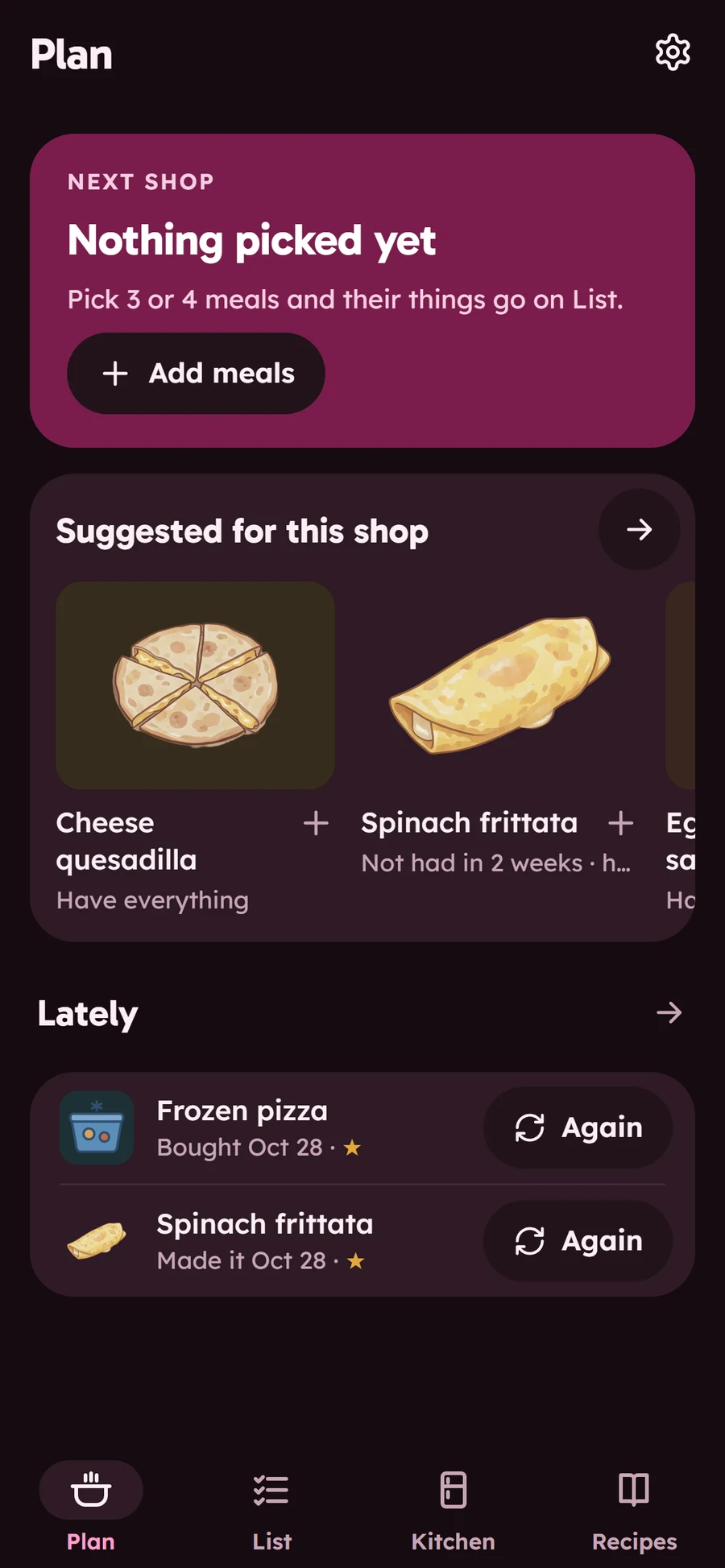
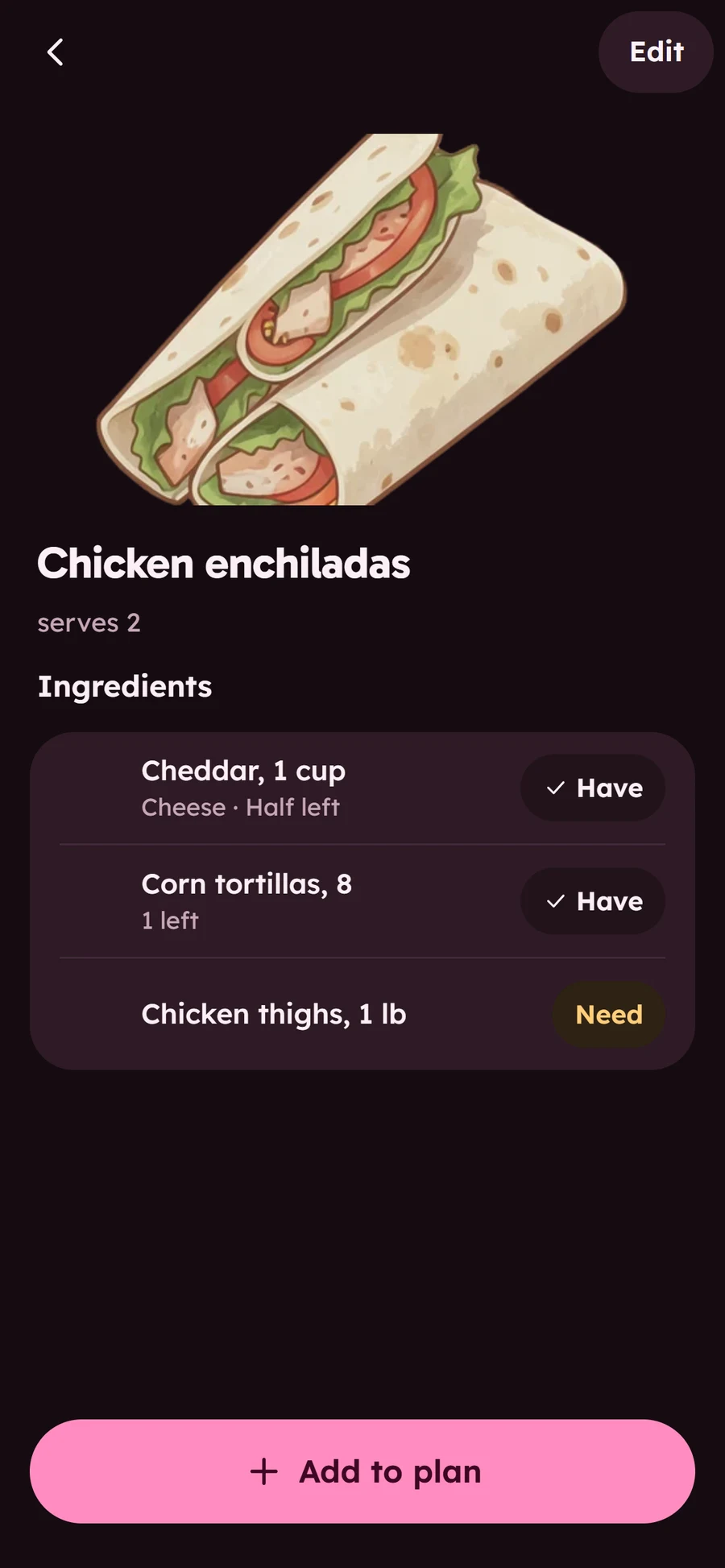
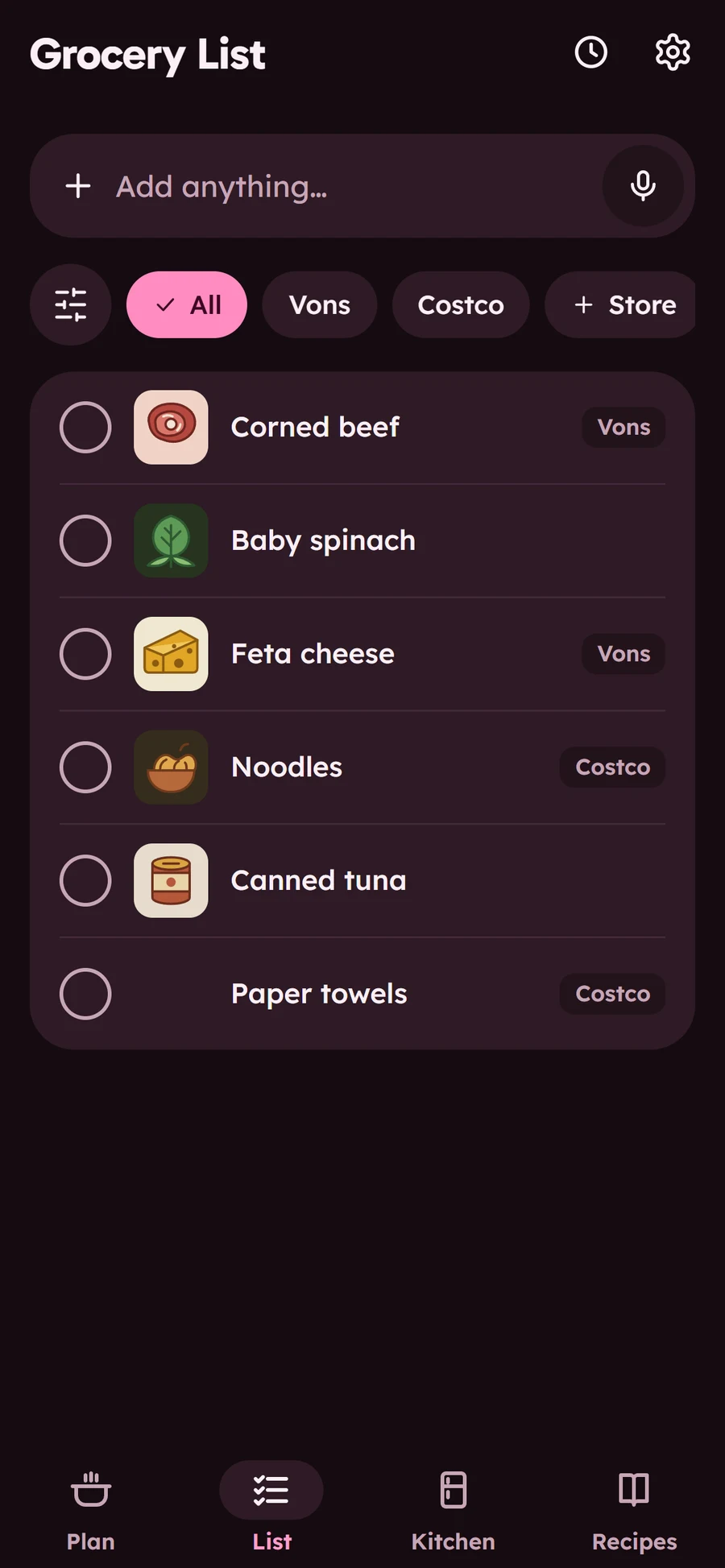
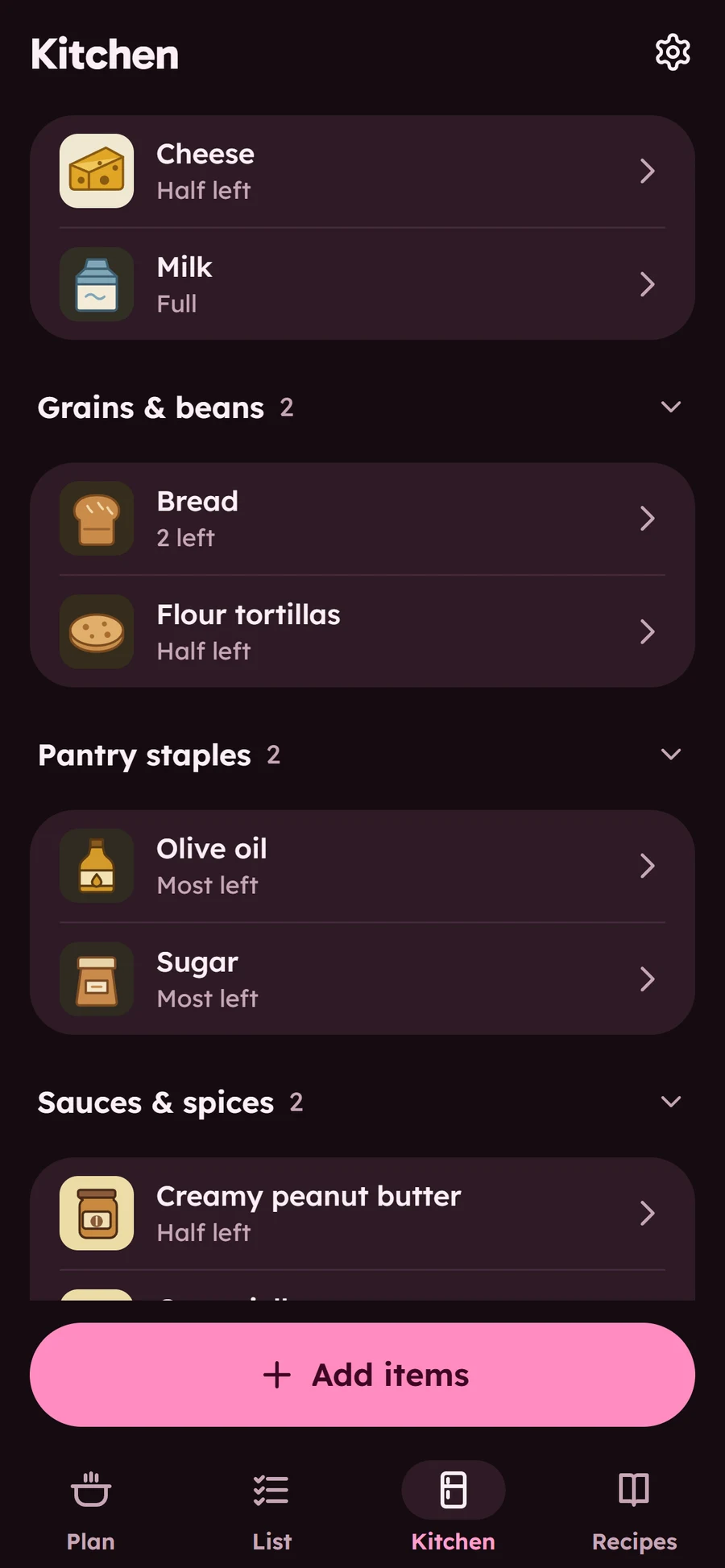
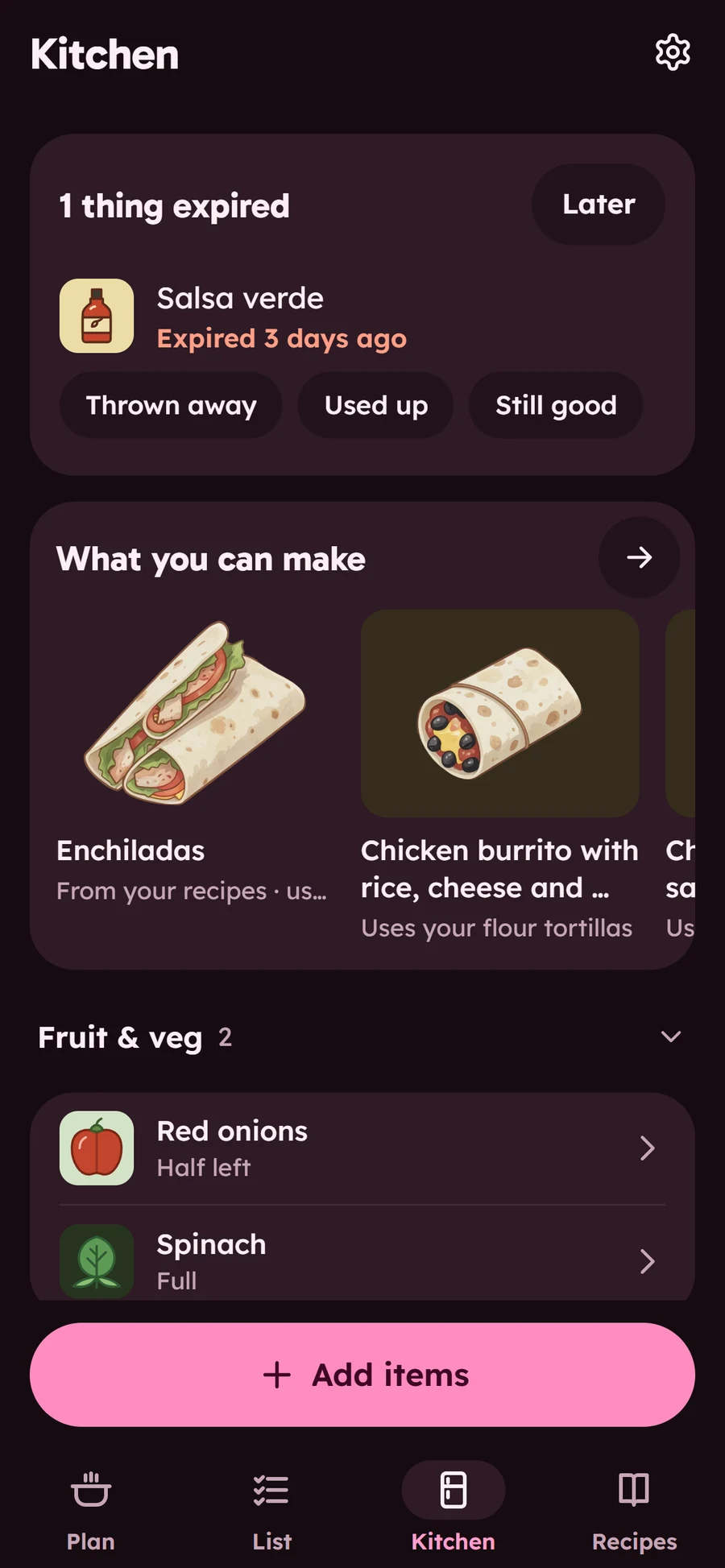
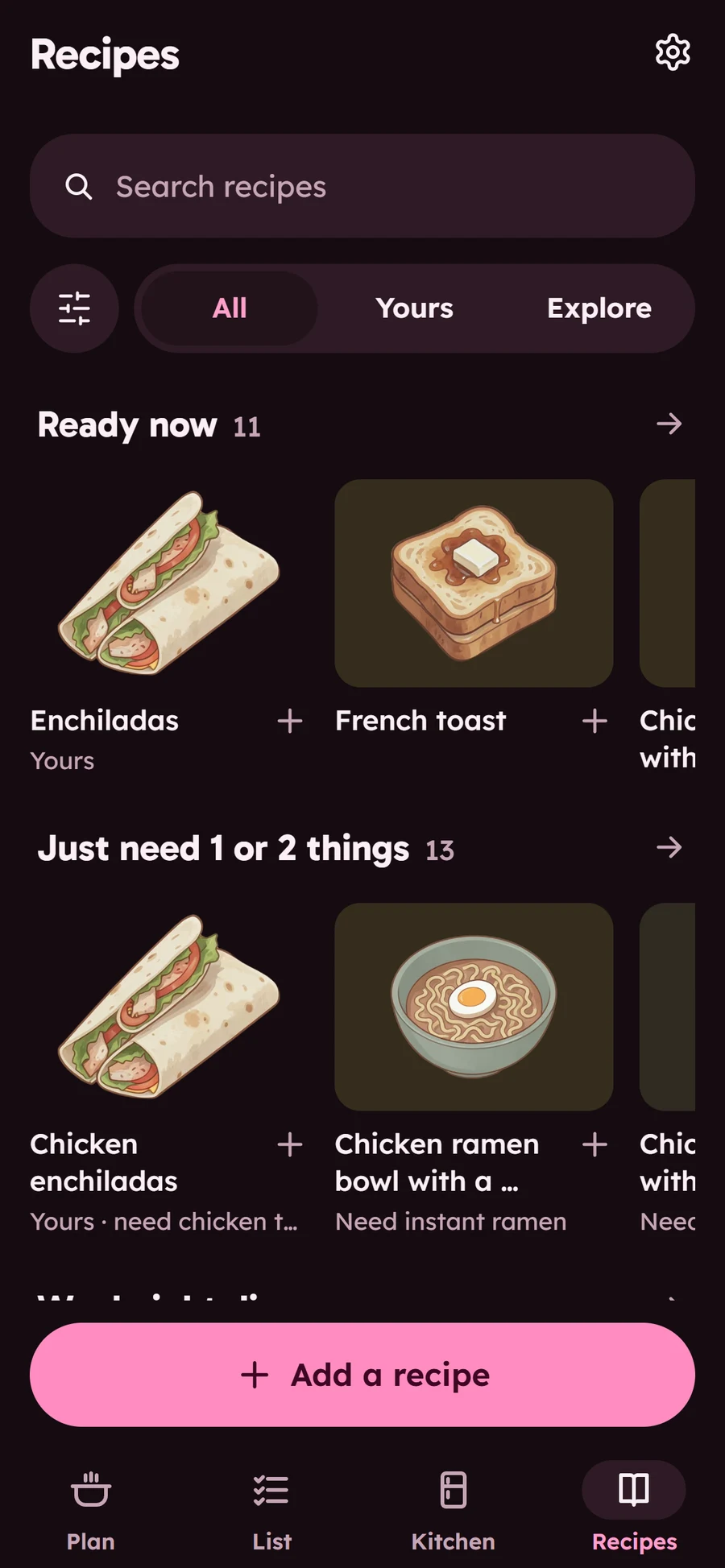
I wanted Agoure to start simple and only get more complex at a few checkpoints. So the first version of Agoure Planner worked for one person: me. It has run my shopping since Oct 30, on Android and the web. Once I had tested and refined it on my own shops, I opened it up to my fiance, and we have used it together since. After more testing between the two of us, the next checkpoint grows it in both directions: more of the plan built in, and more households let in.
Claude as a connector.
Agoure also works inside the Claude app through a connector. Say “we used the last of the chicken” and Claude drafts the change to the kitchen and saves it in the same reply. When a request isn't clear it asks one question first, and “undo that” puts back whatever it just did. The same goes for adding to the list, renaming things and saving a new recipe.
It reads everything the app knows: the list, the plan, the kitchen, our recipes and past shops. So “what can I make tonight?” gets the same answer the app would give, and the conversation runs on my Claude plan instead of Agoure's own AI budget.

A feedback loop.
Claude is also how Agoure gets fixed. When something on a shop doesn't work the way I want, I describe it from my phone, and the fix comes back as a change I can review and ship from the same phone.
- 01
Spot it on a shop
Something on the list, the plan or the kitchen doesn't work the way it should.
- 02
Tell Claude
I describe it from my phone. Claude can read what's really in Agoure to see the problem for itself.
- 03
Claude fixes it
A cloud session makes the change, runs the tests, and opens a pull request that says what I'll see differently.
- 04
Merge, and it ships
I review and merge from my phone. The app picks up the update the next time it opens.
Where it goes from here.
The planner covers problem 01. The other three get added to Agoure one at a time, on top of the receipt log and the meal memory it's already building.
- 02
Sales before the trip
Each week, pull our stores' sales and keep the ones on things we actually buy, checked against what we usually pay. Sales then nudge which meals Plan suggests, and sale items get marked on the list.
- 03
Prices before the trip
Use the prices our receipts already record to estimate what a list will cost at each of our stores and say which one is cheapest. A second stop only gets suggested when it saves enough to be worth the drive.
- 04
Spending over time
Turn the receipt log into a picture of where the money goes: monthly totals by store and category, how that tracks against a budget, and how the prices we pay for each item change.
Progress, week by week.
A weekly log of what got built and what changed along the way.
- Week of Nov 16, 2026FoodBrain becomes AgoureFoodBrain becomes Agoure: phase 19 renames the app, and the accounts around it, in one afternoon.1 entry · 2 min read
- Week of Nov 9, 2026A second household member, and Explore creators replaces the recipe poolA second household member is planned, built and shipped in a day, then Explore creators replaces the shared recipe pool.2 entries · 3 min read
- Week of Nov 2, 2026Fixes from a phone, one can-make rule, and What you can make as railsFixes sent from a phone through cloud sessions, one can-make rule, What you can make redrawn as rails, and five more phases shipped.6 entries · 5 min read
- Week of Oct 26, 2026FoodBrain gets rethought, and the new Planner is built through phase 11A search for a demo app turns into a rethink of FoodBrain, and Phase Runner builds the new Planner through phase 11 in six days.7 entries · 6 min read